B2B vs B2C Mobile Recharge Software — What is the Difference?
Confused between B2B and B2C mobile recharge software? Learn the key differences, business models, earning potential, and which one suits your recharge business in India.
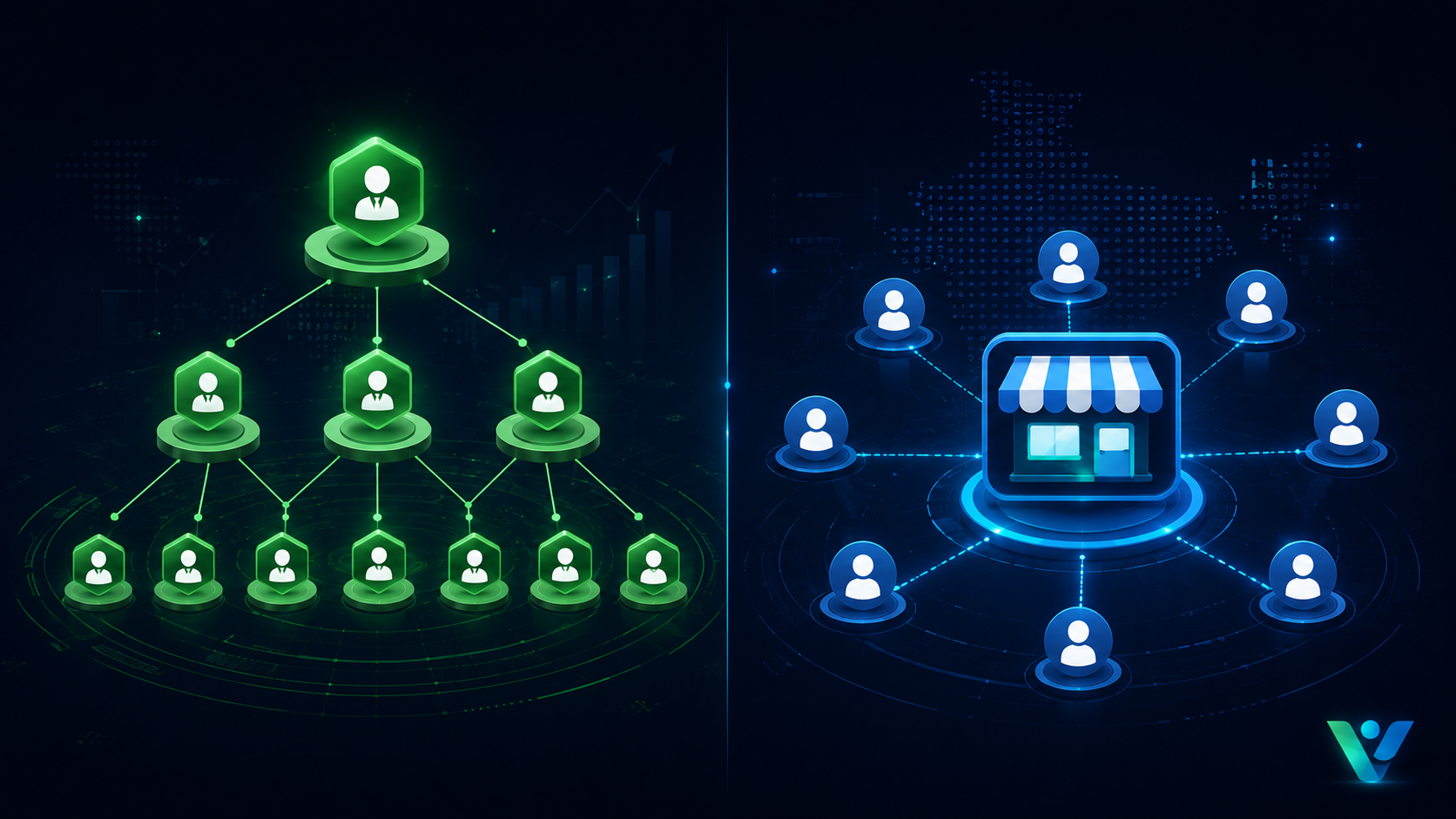
B2B vs B2C Mobile Recharge Software — What is the Difference?
If you are planning to enter the mobile recharge business in India, one of the first decisions you will face is choosing between B2B and B2C recharge software. These two models look similar on the surface — both let you process mobile recharges, DTH recharges, and bill payments — but they serve completely different business goals, audiences, and revenue structures.
Choosing the wrong model early can mean rebuilding your entire business later. This guide explains exactly what separates B2B and B2C recharge software, who each model is for, and how to decide which one fits your goals.
What is B2C Mobile Recharge Software?
B2C stands for Business-to-Consumer. A B2C recharge platform is built for end customers — the actual people who want to recharge their mobile number, pay an electricity bill, or top up their DTH connection.
Think of apps like Paytm, PhonePe, or Google Pay for recharge — these are B2C platforms. A customer downloads the app, enters their mobile number and amount, pays through UPI or card, and the recharge is processed instantly. There is no concept of distributors, retailers, or commission hierarchies — just the business and the end customer.
If you launch a B2C recharge app or website, your revenue comes from:
- A small margin on each transaction (the difference between what the operator charges and what you collect)
- Cashback-funded user acquisition strategies (lower margins, higher volume)
- Advertisements or cross-selling other financial products within the app
B2C platforms require significant marketing investment to acquire users — you are competing directly with Paytm, PhonePe, and Google Pay, all of whom have enormous brand recognition and marketing budgets.
What is B2B Mobile Recharge Software?
B2B stands for Business-to-Business. A B2B recharge platform is not built for end customers directly — it is built for entrepreneurs who want to run their own recharge distribution business with a network of distributors and retailers underneath them.
In a B2B model, the structure looks like this:
Admin → Master Distributor → Distributor → Retailer → Customer
The Admin (you, the platform owner) onboards Master Distributors and Distributors, who in turn onboard Retailers — local shop owners, Kirana stores, mobile shops, and CSC centres. Retailers are the ones who interact with end customers and process recharges on their behalf, earning a commission on every transaction.
As the Admin, you earn a margin on every single transaction processed across your entire network — without needing to acquire millions of end customers yourself. Your "customers" are the distributors and retailers who join your network.
V2S Infosystem's B2B Mobile Recharge Software is built specifically for this model — with Admin, Master Distributor, Distributor, and Retailer panels, wallet management, and automated commission distribution at every level.
Key Differences Between B2B and B2C Recharge Software
| Factor | B2C Recharge Software | B2B Recharge Software |
|---|---|---|
| Target User | End consumers (general public) | Distributors, retailers, entrepreneurs |
| Business Structure | Single-tier — business to customer directly | Multi-tier — Admin, Master Distributor, Distributor, Retailer |
| Revenue Source | Small margin per transaction from millions of users | Commission spread across entire network at every level |
| Customer Acquisition | High marketing cost — compete with Paytm, PhonePe | Low marketing cost — recruit distributors and retailers, not millions of users |
| Investment Required | Higher — app development, UPI integration, marketing | Lower — starts from ₹1,499/month subscription |
| Who Processes Transactions | Customer themselves via app | Retailer processes on behalf of customer |
| Scalability | Requires continuous user acquisition | Scales through network expansion — each new retailer brings their own customers |
| Best For | Large companies with marketing budgets and consumer brand strategy | Entrepreneurs starting with limited capital who want to build a distribution network |
Why Most Entrepreneurs in India Choose B2B Recharge Software
For someone starting a recharge business without a large marketing budget or brand presence, B2B is almost always the better starting point. Here's why:
You Don't Need Millions of Users — You Need a Few Hundred Active Retailers
A B2C platform needs millions of downloads to become profitable because the margin per transaction is tiny. A B2B platform only needs a network of active retailers — each retailer brings their own existing customer base from their shop. You are not building an audience from zero; you are tapping into retailers who already have walk-in customers.
Lower Investment, Faster Launch
B2B recharge software is available as a monthly subscription starting from ₹1,499/month with V2S Infosystem — no app development cost, no UPI payment gateway integration cost, no large marketing budget required. You can be operational within days.
Multiple Revenue Streams at Every Level
In a B2B model, you earn from recharge commissions, BBPS bill payments, AePS cash withdrawals, domestic money transfer, and recharge API reselling — all processed through your network. Read our complete guide on mobile recharge business investment and profit margin in India for detailed earning figures at each level.
Network Effect Without Brand Marketing
Every new distributor you onboard brings their own retailers. Every new retailer brings their own customers. Your network grows organically through business relationships — not through advertising spend.
Can a B2B Platform Also Serve B2C Customers?
Yes — this is sometimes called a B2B2C model. In this setup, the Admin runs a B2B network of distributors and retailers, but also offers a customer-facing app or website where end customers can recharge directly.
This hybrid approach gives you the network-driven growth of B2B along with a direct consumer channel. However, most entrepreneurs starting out should focus on B2B first — building a strong retailer network — before adding a B2C-facing layer, since the B2C layer requires additional development and ongoing marketing investment.
Which Model Should You Choose?
Ask yourself these questions:
- Do you have a large marketing budget to acquire app users? If no — choose B2B.
- Do you have existing relationships with shop owners, Kirana stores, or mobile shops? If yes — B2B lets you onboard them as retailers immediately.
- Do you want to start with minimal investment? B2B subscription plans start from ₹1,499/month — far lower than B2C app development costs.
- Are you looking for a side business or a full-time platform business? B2B is ideal for both — you can start small with a handful of retailers and scale into a full distribution network over time.
For most entrepreneurs entering the recharge business in India in 2026, B2B is the practical starting point. It requires lower investment, has faster time-to-revenue, and builds a sustainable network-based business model. If you later want to add a consumer-facing app, you can expand into B2B2C without rebuilding your core platform.
If you're ready to get started, read our complete guide on how to start a mobile recharge business in India, or learn about specific roles in our guide on how to become a recharge distributor in India.
Frequently Asked Questions
Is B2B recharge software more profitable than B2C?
For most new entrepreneurs, yes — because B2B requires lower upfront investment and does not require competing for millions of app users against giants like Paytm and PhonePe. B2B profitability comes from network size — the more distributors and retailers you onboard, the more transaction volume flows through your platform, and you earn a margin on all of it.
Can I start with B2C and switch to B2B later?
It is technically possible, but not recommended as a starting strategy. B2C requires significant upfront investment in app development, payment gateway integration, and marketing — all before you have any revenue. B2B lets you start generating commission revenue from day one with a much smaller initial investment. Most successful platforms in India started as B2B and added a B2C layer (B2B2C) only after building a strong distributor network.
What is the minimum investment for B2B recharge software?
V2S Infosystem's B2B Mobile Recharge Software starts from ₹1,499/month for Version 1 (R1) with a 4-level network structure. Version 2 (R2) at ₹1,999/month adds a Super Distributor level and white label branding. Additional one-time API integration costs range from ₹1,000 to ₹5,000 per service.
Do I need technical knowledge to run a B2B recharge platform?
No. B2B recharge software is provided as a ready-to-use admin panel and Android app. You do not need to write code or build anything — you manage distributors, retailers, wallets, and commissions through the existing interface.
What is B2B2C and is it better than pure B2B?
B2B2C combines both models — you run a B2B distributor network while also offering a direct-to-consumer app or website. It is not necessarily "better" — it requires more investment and ongoing marketing for the consumer-facing side. Most businesses adopt B2B2C as a second phase after establishing a profitable B2B network, not as a starting point.
Which is easier to scale — B2B or B2C?
B2B is generally easier to scale for new entrepreneurs because growth comes through business relationships — onboarding new distributors and retailers — rather than mass consumer marketing campaigns. Each new retailer brings their own existing customer base, creating organic network growth without proportional marketing spend.
Ready to start your B2B recharge business? Explore the complete B2B Mobile Recharge Software platform and see plans starting from ₹1,499/month.