What is White Label Mobile Recharge Software and How Does It Work?
Confused about white label recharge software? Learn what it is, how it works step-by-step, what it costs in India, and how it differs from B2B software and recharge APIs.
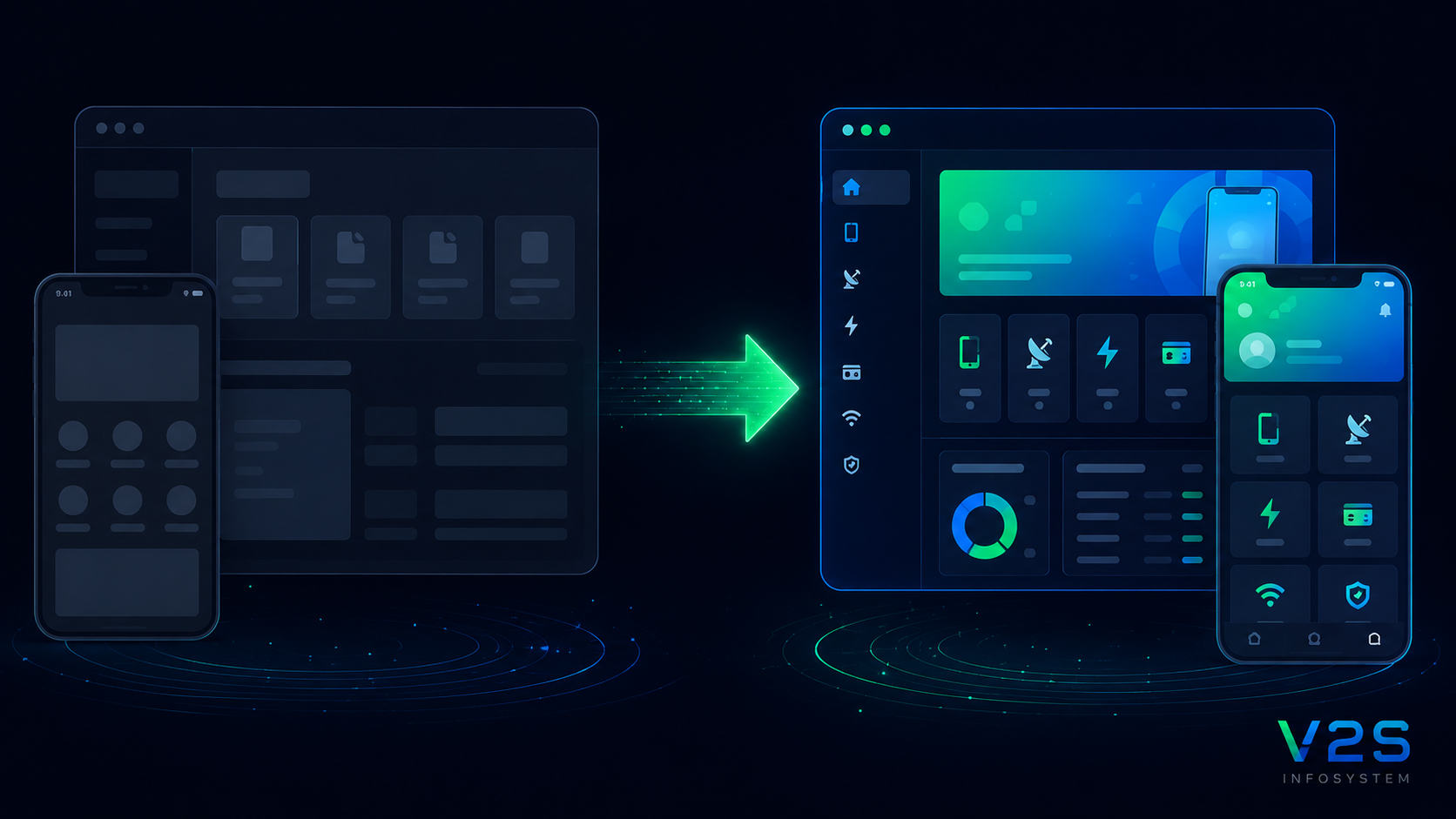
What is White Label Mobile Recharge Software and How Does It Work?
If you've been researching how to start a recharge business in India, you've likely come across the term "white label recharge software" repeatedly — often alongside promises of launching "your own branded recharge company" within days. But what does white label actually mean in practice, and how is it technically different from regular B2B recharge software?
This guide breaks down exactly what white label mobile recharge software is, how it works step by step, what it costs in India, and how to decide if it's the right choice for your business — or if a non-white-label plan would serve you just as well at a lower cost.
What Does "White Label" Actually Mean?
White label is a simple concept borrowed from manufacturing: one company builds a product, and other companies sell it under their own brand name — as if they built it themselves. The classic example is supermarket "store brand" products — the same factory often produces multiple brands of the same item, each with different packaging.
Applied to recharge software, white label means: V2S Infosystem builds and maintains the recharge platform — the servers, the recharge APIs, the admin panel logic, the Android app codebase — and you operate it under your own company name, your own logo, your own domain, and your own branded Android app. Your distributors, retailers, and customers see your brand throughout. They have no idea V2S Infosystem is the underlying technology provider.
This is fundamentally different from building your own software from scratch, which would require hiring developers, building telecom API integrations, setting up servers, and months of development time — all before processing a single transaction.
How Does White Label Recharge Software Work? Step by Step
Here is exactly what happens from sign-up to going live with a white label recharge platform:
Step 1: Sign Up and Complete KYC
You provide basic business documents — PAN card, Aadhaar card, business bank account details, and GST certificate if applicable. This is standard KYC required by any fintech software provider before activating your account.
Step 2: Provide Your Branding Details
You give the provider your company name, logo, brand colors, and the domain name you want your platform to run on (e.g., yourcompanyname.com). If you don't have a domain yet, you typically need to purchase one separately.
Step 3: The Platform Gets Rebranded
The provider applies your branding to the admin panel, the retailer/distributor web portal, and the Android app. Your logo appears on every screen. The app is published to the Play Store under your company name — not the software provider's name.
Step 4: Recharge APIs Are Integrated
The underlying recharge APIs — for mobile recharge, DTH, BBPS, AePS, DMT, and other services — are connected to your platform. Each API integration is typically a one-time cost (₹1,000 – ₹5,000 per API with V2S Infosystem). This is the same backend infrastructure used across all clients, just connected to your branded front-end.
Step 5: You Build Your Network
As the Admin, you start onboarding Master Distributors, Distributors, and Retailers — all under your brand. You transfer wallet balance down the chain, set commission rates at each level, and your network starts processing transactions.
Step 6: Transactions Flow Through Automatically
When a retailer processes a recharge for a customer, the request flows through your branded app, hits the backend recharge API, gets processed by the telecom operator, and the response comes back — all within seconds. The retailer sees your brand throughout; they never interact with V2S Infosystem directly.
For the full network structure and how commissions flow through each level, see our guide on how to start a mobile recharge business in India.
White Label vs B2B vs Recharge API vs API Reselling — What's the Difference?
This is where most people get confused. These four terms get used interchangeably, but they mean very different things:
| Product | What You Get | Branding | Best For |
|---|---|---|---|
| B2B Recharge Software (R1) | Full admin panel, Android app, distributor hierarchy | V2S Infosystem branding | Entrepreneurs starting with lowest cost, branding not a priority yet |
| White Label Recharge Software (R2) | Everything in B2B, plus full rebranding | Your own brand, logo, domain, app | Entrepreneurs who want to build a recognizable company brand from day one |
| Recharge API | API credentials and documentation only | N/A — you integrate into your own software | Developers who already have their own platform |
| API Reselling Software | Platform to create and sell API credentials to others | Your own brand for API clients | Businesses wanting to become an API provider themselves |
With V2S Infosystem, Version 1 (R1) at ₹1,499/month gives you the full B2B platform without white label branding. Version 2 (R2) at ₹1,999/month adds white label — your own brand, logo, domain, and Android app — plus a Super Distributor level in the hierarchy. The underlying technology, API reliability, and feature set are identical between R1 and R2 — the difference is entirely about branding and the extra hierarchy level.
What Does White Label Recharge Software Cost in India?
Pricing in the Indian market varies significantly depending on the provider's business model. There are three common pricing structures:
1. One-Time License Fee
Some providers charge a large one-time fee — anywhere from ₹10,000 to ₹50,000 or more — for "lifetime" access to the white label software. This can seem attractive upfront but often comes with limited ongoing support, and you may still pay separately for hosting, API integration, and maintenance.
2. Monthly Subscription
V2S Infosystem uses this model — ₹1,999/month for white label (R2), ₹1,499/month for non-white-label (R1). This keeps your upfront investment low, includes hosting and infrastructure, and lets you cancel if the business doesn't work out — far less risky than a large one-time payment.
3. Commission-Based Models
Some providers reduce the subscription cost but take a cut of your transaction commissions. This can work if you're processing very high volumes, but it means the provider's incentives may not always align with yours.
Hidden Costs to Watch For
Regardless of the pricing model, watch for these additional costs that are often not included in the headline price:
- API Integration: ₹1,000 – ₹5,000 per API (recharge, BBPS, AePS, DMT) — typically one-time
- Domain Registration: If you don't already own a domain, this is a separate annual cost
- Annual Maintenance Charges (AMC): Some one-time-license providers charge AMC for continued support and updates
- Wallet/Security Deposit: Some providers require an initial wallet deposit to start processing transactions
For a complete breakdown of V2S Infosystem's pricing structure and what's included in each plan, see our white label mobile recharge software page.
Who Should Buy White Label Recharge Software?
Entrepreneurs Building a Brand from Day One
If your goal is to build a recognizable company — not just operate as a generic recharge reseller — white label lets you establish brand identity immediately. Your retailers and distributors associate the platform with your company name, which matters if you plan to expand into other financial services later under the same brand.
Existing Distributors Wanting Independence
If you're currently working as a distributor under someone else's platform and want to break out on your own — white label lets you take your existing retailer relationships and rebuild them under your own brand, without losing the technology infrastructure you're already familiar with.
Fintech Startups Adding Recharge as a Service
If you're building a broader fintech product — say a digital wallet or financial services app — and want to add recharge and bill payment as one of your features, white label lets you offer this under your existing brand rather than redirecting users to a third-party platform.
Master Distributors Going White Label Themselves
A white label Admin can, in turn, offer white label accounts to other people under their own sub-brand. This means you could become a white label provider yourself — onboarding other entrepreneurs under your brand, who each get their own further-branded experience. This layered structure is one of the most powerful aspects of the model.
What You Need Before Getting Started
Before signing up for white label recharge software, have these ready:
- Business documents: PAN card, Aadhaar card, business bank account, GST certificate (if registered)
- Brand assets: Logo (preferably in vector format), brand color codes, company name
- Domain name: Either purchased already or ready to purchase — this becomes your platform's web address
- Initial wallet funding plan: Decide how much working capital you'll allocate to fund your network's wallet for the first month
- A basic commission structure in mind: Even a rough idea of what margins you'll offer at each level (Master Distributor, Distributor, Retailer) helps you configure the platform faster at launch
Is White Label Right for You, or Should You Start with R1?
If branding isn't a priority right now and you simply want to test the recharge business model with minimal investment, V2S Infosystem's R1 plan at ₹1,499/month gives you the full B2B platform without the white label cost difference. Many entrepreneurs start with R1, validate their business with a small network of retailers, and upgrade to white label (R2) once they're confident in the model and ready to build a brand identity.
On the other hand, if you already have business relationships, a company name, and a vision for a branded fintech business — starting directly with white label (R2) avoids the friction of rebranding later, when you'd need to migrate retailers and distributors to new branding mid-operation.
Frequently Asked Questions
Is white label recharge software the same as B2B recharge software?
No, but they're closely related. B2B recharge software refers to the multi-level distributor/retailer business model itself — Admin, Master Distributor, Distributor, Retailer. White label refers specifically to whether that B2B platform carries your branding or the provider's branding. V2S Infosystem's R1 is B2B without white label; R2 is B2B with white label.
Do I need technical skills to operate white label recharge software?
No. The platform is provided ready-to-use — you don't need to write code or manage servers. You operate through the admin panel and Android app just like any other business software. Technical skills are only relevant if you want to make custom modifications beyond standard branding.
How long does it take to launch a white label recharge platform?
With most providers, including V2S Infosystem, the rebranding and setup process typically takes a few days to about two weeks, depending on how quickly you provide branding assets and complete KYC. API integrations for additional services (BBPS, AePS, DMT) can be added after launch as needed.
Can my distributors get their own sub-branding under my white label platform?
This depends on the specific platform tier. With V2S Infosystem's white label (R2), the White Label Admin account itself can extend further white label accounts to others under their own branding — creating a layered structure where your top distributors could potentially run their own sub-branded version of the platform.
What happens if I start with R1 and want to upgrade to white label later?
You can upgrade from R1 to R2 (white label) as your business grows. However, switching branding after you've onboarded retailers and distributors means they'll need to adjust to the new brand identity — app icons, domain, company name. It's generally smoother to decide on branding before building a large network, but upgrading later is possible.
Does white label include the Android app, or do I need to build my own?
The Android app is included and gets rebranded with your company name, logo, and color scheme, then published to the Play Store under your developer account. You don't need to build an app from scratch — only provide your branding assets and a Play Store developer account.
Ready to launch your own branded recharge business? Explore V2S Infosystem's white label mobile recharge software plans, or compare with the standard B2B Mobile Recharge Software if branding isn't your immediate priority.